
Commission a sculpture: materials, cost and briefing
Portrait busts, figures, pet sculptures, memorials, garden pieces and small collectibles from verified sculptors. Here's how sculptures are made, what moves the price, how to brief a sculptor and how to look after the finished piece.
Post your sculpture commission — free Posting is free. Nothing is charged until you accept an artist's bid.
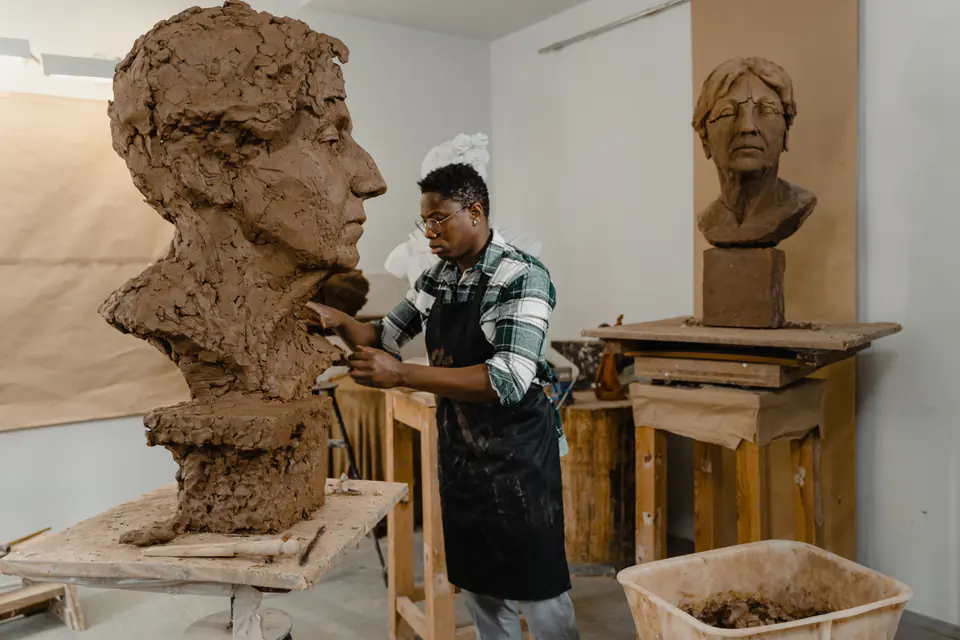
A commissioned sculpture is made for you, from your references, at the size and in the material you choose. Most start the same way: the sculptor models the form in clay or digitally, you approve it, and then it is fired, cast or printed in the final material. Knowing the main routes helps you write a better brief and compare bids that use different methods.
What people commission
Portrait busts
A head and shoulders of a person, from life sittings or from photos. Ask how many angles the sculptor needs and whether the likeness is approved in clay before casting.
Figures and statues
Full figures from tabletop size to life-size. Larger pieces need an internal armature, more studio time and, in bronze, much higher foundry costs.
Pet sculptures
Dogs, cats and horses in clay, resin or bronze, often from photos. Send side, front and three-quarter views and a photo that shows the coat pattern.
Memorials and plaques
Relief portraits, plaques and small memorial figures. Tell the sculptor whether the piece will be indoors or outdoors, because that decides the material.
Garden and outdoor pieces
Weather-resistant work in bronze, stone, metal or sealed concrete. Ask about the base, how it is fixed down and what maintenance it needs.
Collectibles and miniatures
Small figures sculpted digitally and resin-printed or cast, then painted. Good for characters, game pieces and gifts, and usually the most affordable route.
Materials and methods
A good bid says which material and method the sculptor plans to use, and why. Many pieces combine two: a clay original cast in resin, or a digital sculpt printed and then cast in bronze.
Fired clay (ceramic)
Modelled in clay, hollowed, dried and kiln-fired. Warm, handmade surface; fragile if dropped and size is limited by the kiln. Usually one of the more affordable finished materials.
Polymer and air-dry clay
Common for small figures and pet sculptures. No kiln needed. Less durable than fired ceramic and best kept indoors.
Resin casting
The sculptor makes an original, takes a silicone mold and casts copies in resin, which can be painted or given a faux-bronze finish. Lighter and cheaper than bronze, and the mold makes extra copies possible.
Bronze (lost-wax casting)
The original is molded, cast in wax, invested in a ceramic shell and poured in bronze at a foundry, then welded, chased and patinated. Durable outdoors and long-lasting, and the most expensive route: the foundry stages alone can cost thousands.
Stone and wood carving
Carved directly from a block, so there is no mold and no copies. Slow, skilled work; the block itself can be a large part of the cost.
Digital sculpting and 3D printing
Sculpted in software, approved on screen from every angle, then resin- or filament-printed and finished by hand. Fast changes before printing, easy scaling and repeat copies; often combined with casting for the final piece.
Finishing
Painting, patina, wax, sealing and mounting on a plinth. On small pieces this is often where most of the hours go.
What drives the cost and the lead time
- Size — Height drives material, studio hours and casting cost. A life-size piece is a different project from a 30 cm figure.
- Material — Clay, resin and 3D-printed pieces usually cost far less than bronze or carved stone. In ThePricer's published ranges, small decorative bronzes run $1,000–$5,000 and custom life-size bronze commissions $20,000–$60,000 or more.
- Likeness and detail — A recognisable portrait takes more modelling time and more approval rounds than a stylised figure.
- Casting and editions — Molds are a one-off cost. If you want several copies, the cost of the mold is shared across them.
- Base and installation — A plinth, mounting hardware or an outdoor installation adds materials, labour and sometimes a site visit.
- Deadline — Clay has to dry before firing, and foundries have their own queues. Tight dates mean rush pricing or a different method.
- Shipping — Heavy or fragile pieces need crating and insurance. Ask whether delivery is in the bid.
There's no price list, because every sculpture is different: bids from sculptors who have seen your references give you the real number. Art commission price guide →
How to brief a sculptor
- What it is: bust, full figure, pet, relief plaque, garden piece or collectible.
- Reference photos from several angles: front, both sides, three-quarter and back, in even light.
- Size: the finished height, or 'life-size', and the space it has to fit.
- Material and finish if you know them (bronze, resin, painted, natural clay), or 'open to suggestions'.
- Indoors or outdoors, and whether it needs a base or wall mounting.
- Whether you want approval stages: sketch, clay or digital model, before final casting or printing.
- Number of copies, if more than one.
- The date you need it, and your delivery address.
- Your budget range.
Display and care
Keep fired clay, resin and painted pieces indoors unless the sculptor says the finish is made for outdoors. Sunlight fades paint over time, and frost can crack ceramic that holds water.
Dust with a soft, dry brush. Bronze patinas are usually protected with wax, which an outdoor piece needs renewed from time to time; ask your sculptor how often and with what.
Fix heavy or tall pieces so they can't be knocked over, especially in homes with children or pets.
Shipping and delivery
- Ask how the piece will be packed: foam-fitted boxes for small work, wooden crates for large or heavy pieces.
- Ask for insurance on valuable pieces, and photos of the packed piece before it leaves the studio.
- Fragile parts such as fingers, ears and tails are the most likely to break; some sculptors ship them separately.
- Shipping across borders: ask about customs paperwork and any import duty before you accept a bid.
How a sculpture commission works on The Spool List
- Brief the pieceSubject, size, medium, style references, where it will hang or stand, colours to match, your deadline, your delivery address and a budget range. Photos of the person, pet or place help most.
- Compare artistsArtists reply with a price and a timeline. Look through their past work and reviews, and ask how many sketch or revision rounds are included before you choose.
- Accept a bid and payCard payment goes through Stripe. The Spool List holds it, and the artist isn't paid until you've confirmed delivery.
- Approve, receive and confirmFollow sketches and progress photos in the app: the composition, the underpainting, the clay before it's cast. Once the piece arrives and you confirm delivery, the artist receives the payment.
Post the piece once with your references, and any verified maker with the right skills can bid. More on how it works →
Studios and equipment artists register
Artists and makers on The Spool List add their studio setups and machines to their profile. These are the ones used for art, pottery and handmade craft.
Sculpture studio
Clay, stone, wood and mixed-media sculpture
Mould making and casting
Silicone moulds and resin casts of a sculpt (e.g. Smooth-On Mold Star Silicone Kit, Alumilite Amazing Casting Kit)
Ceramic kilns
Bisque- and glaze-fire pottery and clay sculpture (e.g. Skutt KM-1027 Kiln, Skutt KM-1227 Kiln, Olympic Kilns 2327HE)
Resin 3D printers
Print a maquette or a sculpt for casting (e.g. Formlabs Form 4, Elegoo Saturn 4 Ultra 12K, Phrozen Sonic Mega 8K S)
Own one of these? Register it free. Join as a maker →
Have a piece in mind?
Brief it once. Let artists bid.
Post your references, size and budget free. Verified painters, potters, sculptors and makers quote, and the platform keeps your payment until you confirm the piece was delivered.
Sculpture commission questions
How much does it cost to commission a sculpture?
It ranges widely with size and material. Small clay, resin or 3D-printed pieces can cost hundreds of dollars, while ThePricer's published ranges put small decorative bronzes at $1,000–$5,000 and custom life-size bronze commissions at $20,000–$60,000 or more. Post your brief for real bids.
Can a sculptor work from photos?
Yes. Most portrait and pet sculptures are made from photos. Send several angles in even light, and say which photo shows the expression or pose you want.
What's the cheapest way to get a custom sculpture?
Usually a smaller piece in fired clay, polymer clay, resin or a digital sculpt that is 3D-printed and painted. Bronze and carved stone cost the most.
Can I see the sculpture before it's cast?
Ask for an approval stage in your brief. Sculptors commonly share photos or video of the clay or digital model from every angle before molding, casting or printing.
Is my payment protected?
You pay when you accept a bid. The platform holds the payment and releases it to the sculptor only when you confirm delivery. If something goes wrong, there's a dispute process.