
How much does a custom painting commission cost?
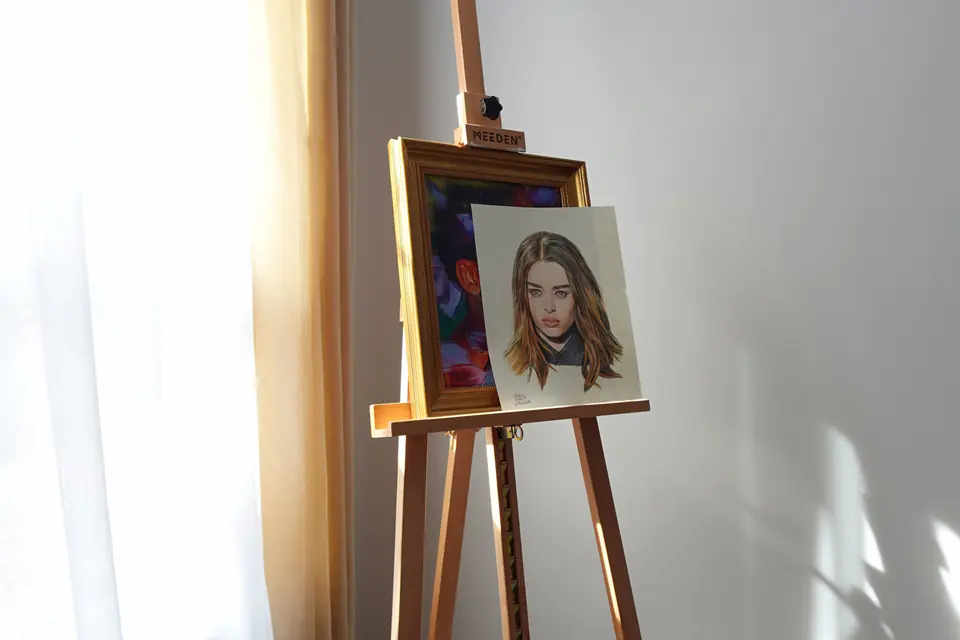
A commissioned painting is usually priced by its size, the artist's experience and the complexity of the subject. Many artists use a simple formula, such as a rate per square inch or per linear inch, plus materials. In one published example, an 18 × 24 in painting priced at $4 per square inch plus materials comes to $1,900 [1]. Portrait specialists charge more: one US portrait agency lists oil head-and-shoulders portraits from $4,000 [2]. Smaller, simpler pieces by emerging artists can cost a few hundred dollars.
How artists price their work
Artwork Archive, an inventory platform for artists, describes three common formulas [1]. Knowing them helps you read a bid.
Per square inch
Width × height × a dollar rate, rounded, plus materials. Artwork Archive's example: an 18 × 24 in painting is 432 sq in. At $4 per sq in that's $1,728, rounded to $1,700. Add double the $100 material cost (to cover a gallery's commission) and the price is $1,900 [1]. The artist in that example started at $2–$3 per sq in at outdoor festivals and now charges $6, and uses a smaller multiplier for larger paintings [1].
Per linear inch
Height + width × a rate. At $20 per linear inch, a 4 × 4 in painting is $160 and a 32 × 32 in painting is $1,280 [1].
Hourly
Hours × hourly rate + materials. At $20 an hour, a 15-hour painting with $100 of materials is $400 [1].
These are examples of how artists build a price, not market rates. Your bids will vary with the artist, the medium and where they work.
Published portrait price points
Portraits of people are their own market. Portraits, Inc., a US portrait agency, publishes these starting prices [2]:
| Portrait | Starting price |
|---|---|
| Head-and-shoulders drawing | from $1,000 |
| Head-and-shoulders pastel | from $3,000 |
| Head-and-shoulders oil | from $4,000 |
| Full-figure pastel | from $7,000 |
| Full-figure oil | from $9,500 |
The agency says additional subjects increase the cost [2]. These are starting prices for established portrait painters. Independent and emerging artists often charge much less.
What drives the price
Size. The biggest single factor under most formulas.
Medium. Oil usually costs more than acrylic, which costs more than watercolour or drawing, because of the materials and the drying and layering time. Digital work has no materials or shipping, but it still takes hours.
Subject and detail. A loose abstract in three colours is quicker than a detailed cityscape or a realistic portrait. Every extra person or animal adds time.
The artist's experience and demand. An artist with gallery representation and a waiting list charges more. Artwork Archive notes that emerging artists often price more affordably [1].
Revisions and sketches. A preliminary sketch or colour study, and rounds of changes, take time. Ask what's included.
Framing, varnish and shipping. Large canvases need crating. Ask whether the bid includes them.
Deadline. Oil paint takes time to dry before varnishing and shipping. A rush job may not be possible in oils.
A worked example
Here's how the formulas play out for a 24 × 36 in (61 × 91 cm) landscape:
- Per square inch at $3: 864 sq in × $3 = $2,592, rounded to $2,600, plus materials
- Per linear inch at $20: (24 + 36) × $20 = $1,200
- Hourly at $25 for 30 hours: $750, plus materials
The same painting comes out at very different prices depending on the formula and rate, which is why bids for one brief can differ so much. The rates above are made up for the example. What matters is that each artist applies their own method consistently, so ask how they priced yours.
Ways to bring the price down
- Go smaller. Under most formulas, size is the biggest factor.
- Choose a quicker medium, such as watercolour or drawing instead of oil.
- Simplify the background.
- Fewer subjects. Every extra person or pet adds time.
- Skip framing and frame it locally.
- Give the artist time. Rush work costs more and may rule out oils.
How to get a fair bid
Give every artist the same brief:
- Size, in inches or centimetres, and orientation.
- Medium, or say you're open to suggestions.
- Subject: reference photos you own, and what matters most in them.
- Style: links to the artist's own past work you like, or descriptions ("loose and colourful", "realistic").
- Where it will hang, and a photo of the wall if you want it to suit the room.
- Framing and shipping needs.
- Budget and deadline.
Agree on copyright and use before work starts. Under US and UK guidance, the artist normally keeps the copyright in a commissioned work unless you agree otherwise in writing [3][4]. That rarely matters for a painting on your wall, but it does if you want prints or a logo.
Commissioning through The Spool List
On The Spool List you post your painting brief once, free. Verified artists bid with a price and a timeline, and you choose based on their past work. You pay when you accept a bid, the payment is held, and the artist is paid when you confirm the painting arrived. That covers what a deposit usually protects, for both sides. There's no buyer fee. See how it works, our price guide, and the fine art market on The Spool List.
Post your painting commission free.
FAQ
Is it cheaper to buy an existing painting?
Often, yes. A commission is made to your size, subject and timeline, and that takes the artist's time. If you're flexible, ask the artist about finished work they already have.
How long does a commissioned painting take?
It depends on the size, the medium and the artist's queue. Oils need drying time before varnishing. Ask for a timeline in each bid.
Can I ask for changes?
Agree the number of revisions up front, usually at the sketch stage, when changes are cheap.
Do I own the copyright?
Usually not, unless the artist assigns it to you in writing [3][4]. You own the painting.